

Scheduling a group meeting can be cumbersome and take up a significant amount of your productive time.
You must be tired of asking everyone on group chats, emails, and where not –
Does Friday at 4 PM work well for all of you?
Most likely, the reply you get is – a mute audience, some saying 4:30 PM would be ideal, while others saying Monday would be more appropriate – an endless loop!
Moreover, if the scheduling process is too complicated, it can drive away your potential clients, causing a significant loss to your business.
In fact, a study by Reclaim.ai in 2024 shows professionals spend up to three hours a week just scheduling and rescheduling meetings, time that could easily go toward billable or client-facing work instead.
This is exactly where a group scheduling tool can help!
List of the Top 10 Group Scheduling Tools
If you search the internet for group scheduling calendar tools, the results will overwhelm you. There are hundreds of such tools, and shortlisting the best is a tough job. That was what I initially felt when creating this list.
What I did was connect with industry experts (sales managers, entrepreneurs, etc.) to know which tools they would prefer using or recommend small businesses or startup owners.
Based on my experience with those tools and user feedback from software review sites, I prepared an in-depth comparison with pros, cons, and pricing. So, let’s begin.
| Group Scheduling Tools | Best For | Pricing Starts From |
| BIGContacts | Easiest All-in-One CRM for Contact Management, Email Marketing & Deal Tracking | Forever free for small teams. Paid starts at at $9.99/month |
| Calendly | Booking Links & Polls | $10/seat/month |
| Doodle | Booking Reports | $6.95/user/month |
| Rallly | Scheduling Meetings by Creating Polls/Votes | $3.50/month |
| MeetFox | Scheduling Links | $10/user/month |
| HubSpot Meetings | Activity Reports | $18/month |
| YouCanBookMe | Customizable Online Scheduling | $10.80/calendar/month |
| CalendarHero | Intelligent Routing | $8/month |
| Google Workspace | Layering Multiple Calendars in a Single View | $6/user/month |
| HoneyBook | Online Meeting Scheduler for Freelancers | $16/month |
1. BIGContacts – Easiest All in One CRM for Contact Management, Email Marketing & Deal Tracking
BIGContacts is one of the best scheduling apps that offers more than just automating reminders and calendar management. It is a cloud-based CRM with contact management software that helps you track meetings and events and manage contacts, leads, sales, and appointments.
I found the software to be quite robust on the feature front. It offers features like automated follow-up emails, calendar syncing, and group scheduling, making it ideal for startups and SMBs that juggle numerous appointments and require a centralized platform for managing them. Its AI assistant is a quiet addition on top of this, nudging you toward contacts who haven’t been scheduled with in a while so appointments don’t just happen, they happen with the right people.
Pros:
- Customizable calendar views for a personalized scheduling experience
- Task management features linked directly to your contacts and calendar
- Advanced search capabilities to quickly find contacts and scheduled events
- Integration with major email platforms for synchronized communication
- Mobile-responsive CRM availability for scheduling on the go
- AI assistant flags contacts overdue for a meeting, keeping your calendar aligned with who actually needs attention
Cons:
- No light and dark mode changing option
- The tool could use more industry-specific templates for emails
Pricing:
Forever free for small teams. Paid starts at $9.99/month.
2. Calendly – Best for Booking Links & Polls
Calendly is a simple and free group scheduling tool that lets you share your availability with others. I like the fact that it allows you to set preferences, such as your working hours, time zones, meeting durations, etc.
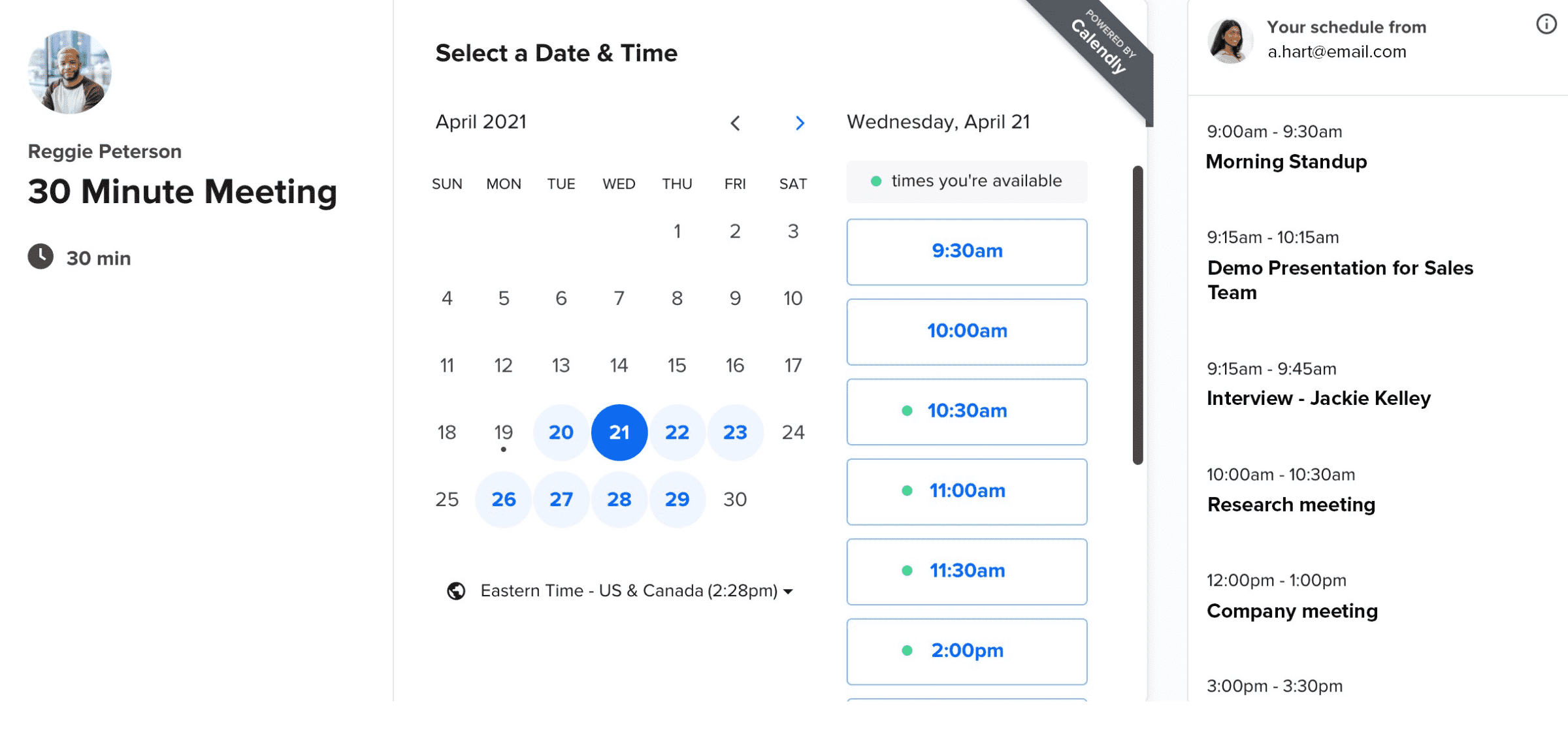
Image Source: Calendly Help
Beyond basic scheduling, I used Calendly for its market research insights. Its analytics dashboard allowed me to track key metrics like meeting booking trends, preferred appointment times, and cancellation rates – offering valuable data to optimize my scheduling strategy and improve client experience.
Pros:
- Seamless integration with popular calendar services like Google Calendar, Outlook, etc., to avoid double-booking
- Automated event notifications to keep all parties informed
- Time zone detection to simplify international meetings
- Customizable booking pages to match your brand
- Group events feature to schedule multiple participants effortlessly
Cons:
- Some users report issues with syncing across multiple time zones
- Limited options for recurring appointments in the basic plan
Pricing:
A free plan is available for 1 calendar connection. Paid options start from $10/seat/month.
3. Doodle – Best for Booking Reports
Doodle is a simple and smart group meeting scheduler tool that helps you find the best time for a meeting with multiple people. It allows you to create and share a poll with different date and time options and invite participants to vote for their preferences – something I really liked.
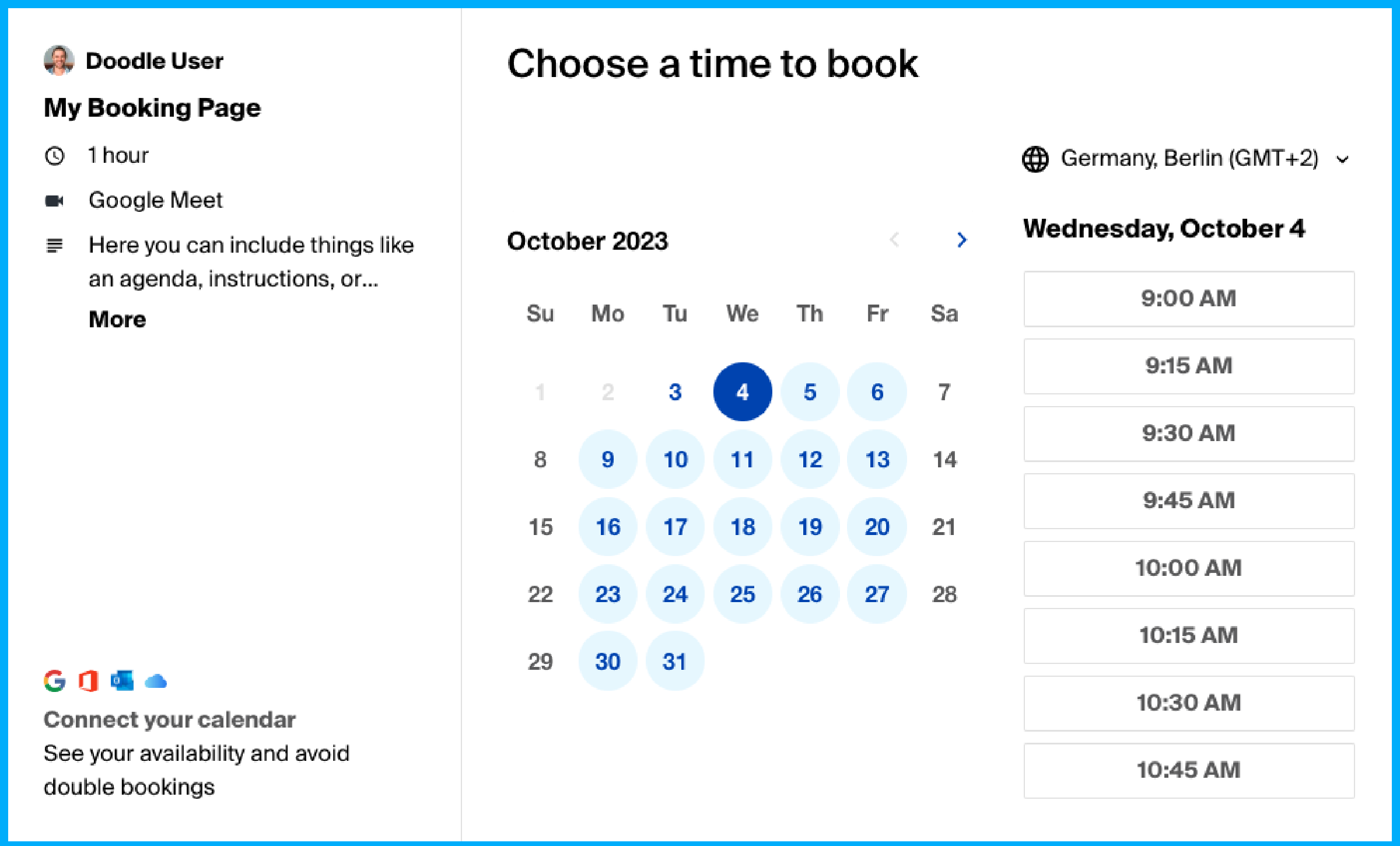
Image Source: Zapier
Keeping these aside, I think Doodle is extremely reliable when it comes to generating booking reports. It provides detailed reports on meeting attendance, preferred time slots, and cancellation rates, enabling you to gain valuable insights into your team’s and clients’ scheduling preferences.
Pros:
- Customizable meeting invites to reflect your brand’s identity
- Time zone support for global team coordination
- Private and public meeting options to cater to different needs
- Anonymous voting for unbiased decision-making in polls
- The ability to add additional information to a poll, such as the meeting agenda, location, and attachments
Cons:
- No custom branding option in the free plan
- Some users find the poll-based scheduling process complicated for simple meetings
Pricing:
A free plan is available for 1 user. Paid options start from $6.95/user/month.
Stop Trading Emails Just to Lock in One Meeting Time
4. Rallly – Best for Scheduling Meetings by Creating Polls/Votes
Rallly is another availability calendar for groups that lets you schedule meetings by creating polls and encouraging votes. I like this approach as it ensures everyone has a say in choosing the most suitable meeting time.
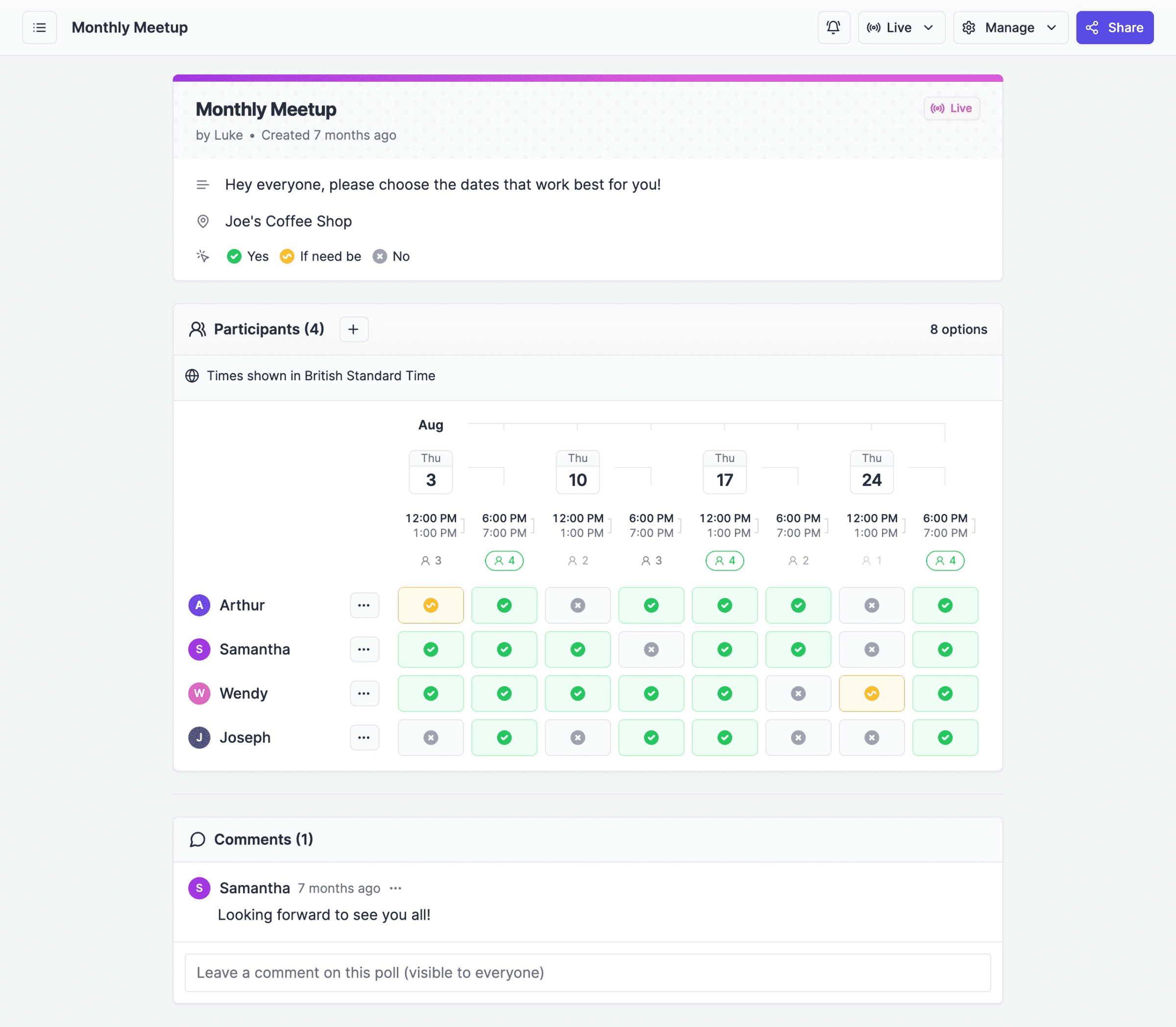
Image Source: Rallly
This is something that reduces the back-and-forth email exchanges often associated with scheduling. Needless to say, it takes team collaboration to the next level. In my opinion, Rallly is best for small businesses that need to schedule meetings with internal parties, such as team members, employees, and managers.
Pros:
- Simple voting mechanism to gauge participant availability
- Integration with Google Calendar for streamlined scheduling
- Customizable poll deadlines to expedite decision-making
- Mobile-responsive design for scheduling on various devices
- Privacy settings to control poll visibility
Cons:
- Polls are automatically deleted as they become inactive
- Limited functionalities compared to more comprehensive scheduling tools
Pricing:
A free plan is available with access to core features. Paid options start from $3.50/month.
5. MeetFox – Best for Scheduling Links
MeetFox, a flexible scheduling tool for teams, stands out for its unique scheduling links. These customizable links can be integrated into your website, email signature, or marketing materials, allowing potential clients to schedule consultations directly and eliminating the need for lengthy email exchanges.
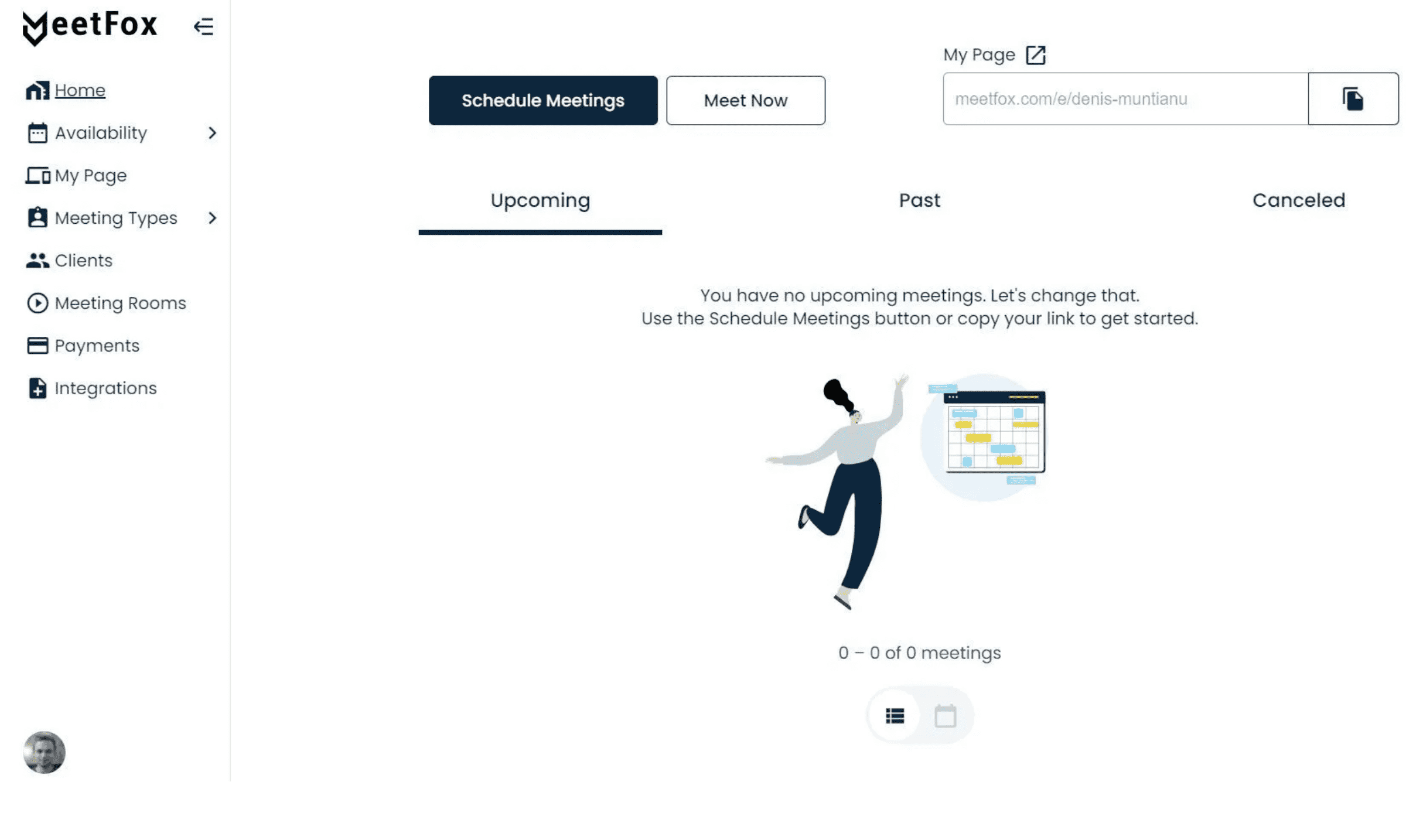
Image Source: SaaSworthy
I found that the software lets you set multiple preferences, such as your working hours, time zones, and meeting durations – a great feature. In my experience, it can be a useful group scheduling tool for businesses that offer online services, such as coaching, consulting, tutoring, and mentoring.
Pros:
- In-built video conferencing functionality for seamless virtual meetings
- Personalized booking links to share with clients and colleagues
- Time zone detection for hassle-free international meetings
- Detailed analytics to track meeting and scheduling patterns
- Client management tools to keep track of meeting history and notes
Cons:
- Very limited video meeting features in the free plan
- Customization options for the booking page can be somewhat limited compared to competitors
Pricing:
A free plan is available for only one meeting type. Paid options start from $10/user/month.
6. HubSpot Meetings – Best for Centralizing Sales, Marketing, and Support Operations
HubSpot Meetings is part of the larger HubSpot ecosystem. I liked how it let me schedule appointments within the context of sales and marketing activities. The software’s strength lies in generating detailed activity reports, making it indispensable for businesses focused on tracking sales engagement and productivity.
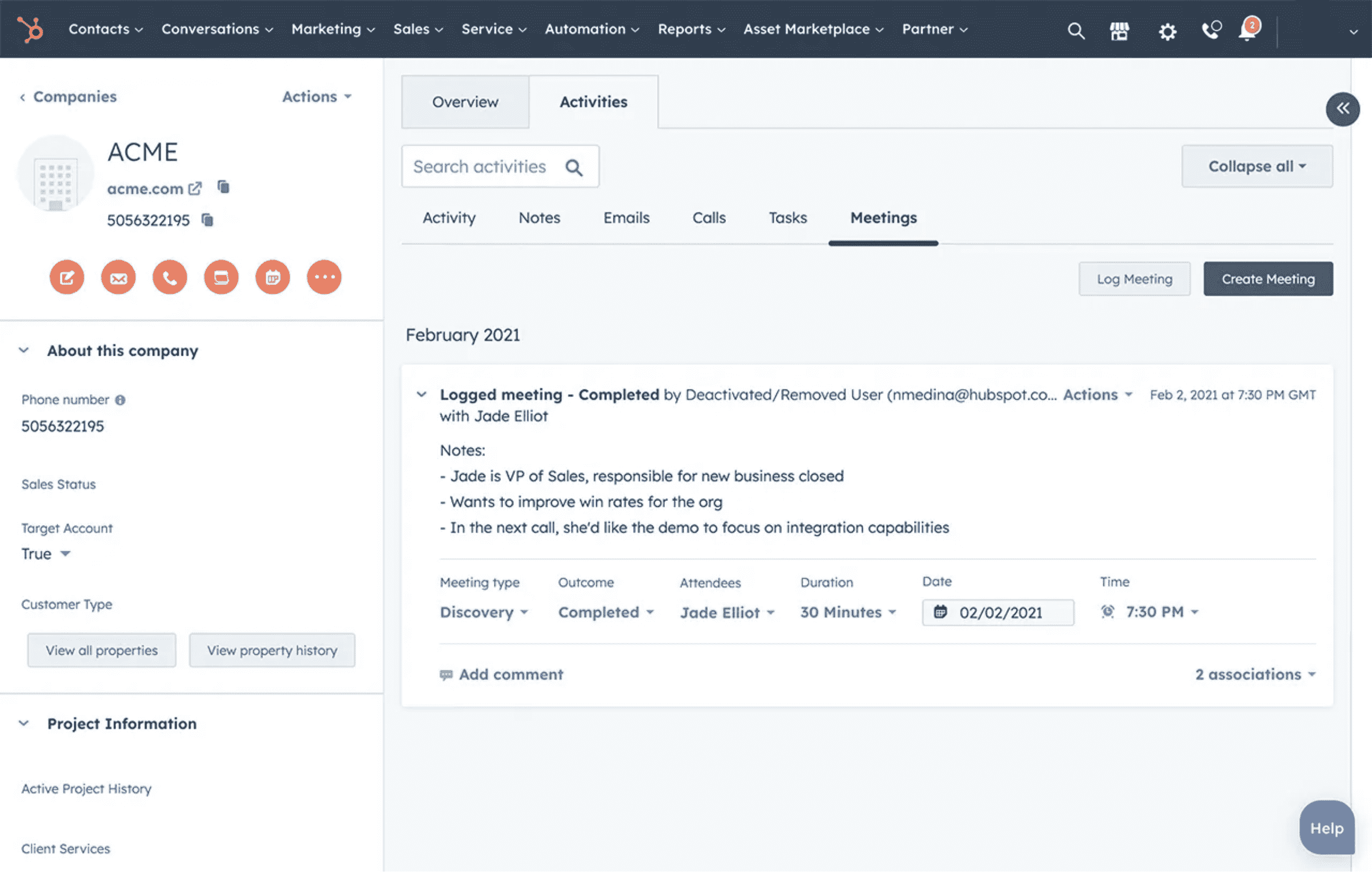
Image Source: HubSpot
It is one of the group scheduling software options that comes with a reliable free tool as long as you are okay with the HubSpot branding. I believe it’s a decent option for companies who are already invested in the HubSpot ecosystem.
Pros:
- Direct integration with HubSpot CRM to keep all client interactions in sync
- Automated booking link sharing to reduce manual scheduling efforts
- Personalized meeting links for each team member
- Round-robin meeting distribution to allocate sales opportunities evenly
- Email and SMS reminders for appointments
Cons:
- Best used within the HubSpot ecosystem, limiting standalone functionality
- Steep learning curve for fully utilizing its advanced features
Pricing:
A free plan is available for 1 personal meeting link. Paid options start from $18/month.
7. YouCanBookMe – Best for Customizable Online Scheduling
YouCanBookMe is my recommendation if you are looking for a free online meeting scheduling tool that excels in customizable online scheduling. This user-friendly platform allows you to tailor your booking page to match your brand.
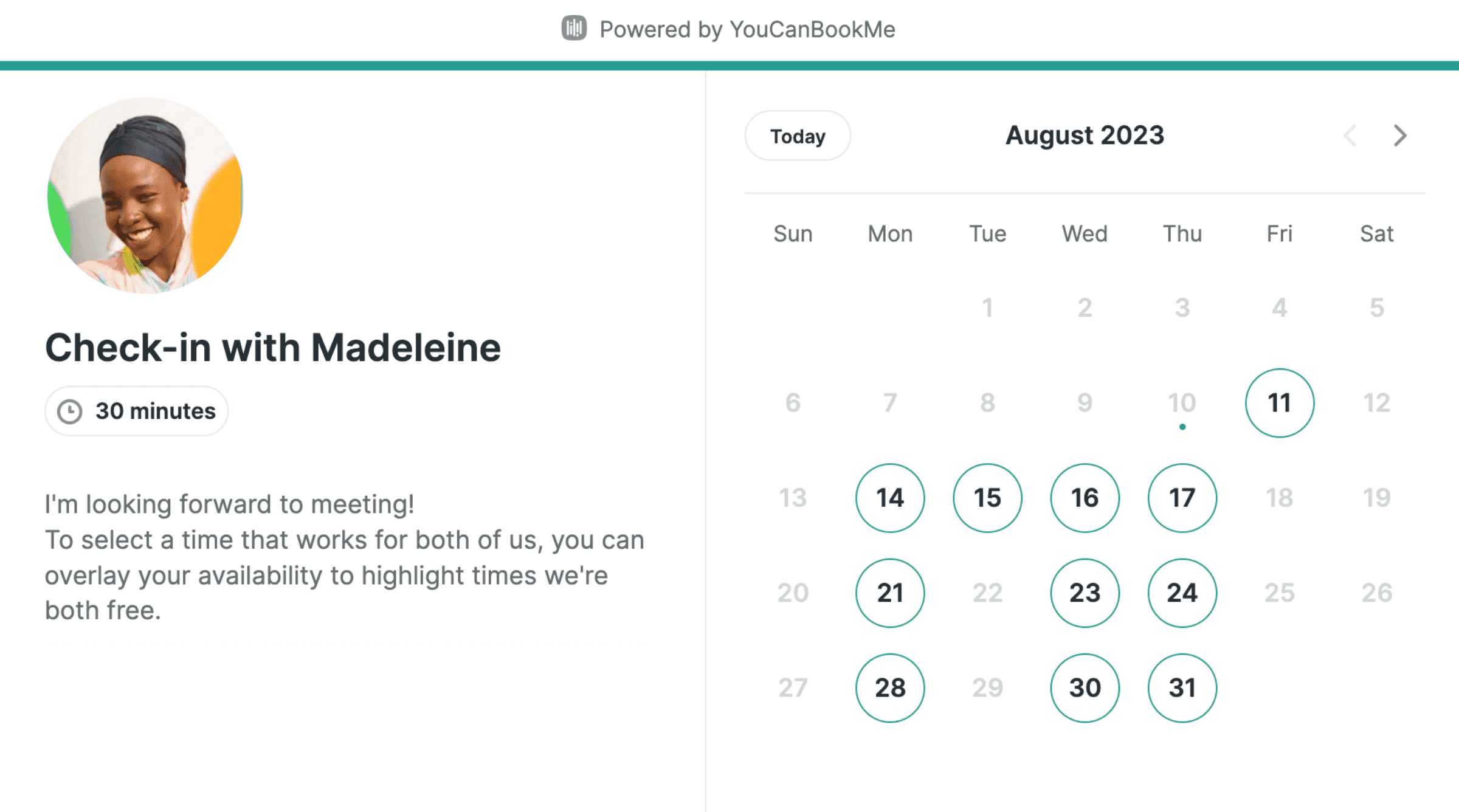
Image Source: YouCanBookMe
You can create personalized booking forms and even integrate online payments, offering a streamlined booking experience for clients. I’d say it’s particularly well-suited for individuals and businesses prioritizing brand consistency across all customer touchpoints.
Pros:
- Highly customizable booking pages to match your brand’s look and feel
- Automated email and SMS reminders
- Embeddable booking widgets for direct integration with websites
- Payment integration for services requiring pre-booking payment
- Flexible scheduling options, including padding times and varying appointment lengths
Cons:
- No group bookings in the free plan
- Occasional reports of glitches with calendar syncing
Pricing:
A free plan is available for only 1 linked calendar. Paid options start from $10.80/calendar/month.
8. CalendarHero – Best for Intelligent Routing
Your search ends here if you were looking for a group scheduling tool for small businesses that take automation to the next level. In fact, this tool brings artificial intelligence into the scheduling arena, offering intelligent routing.
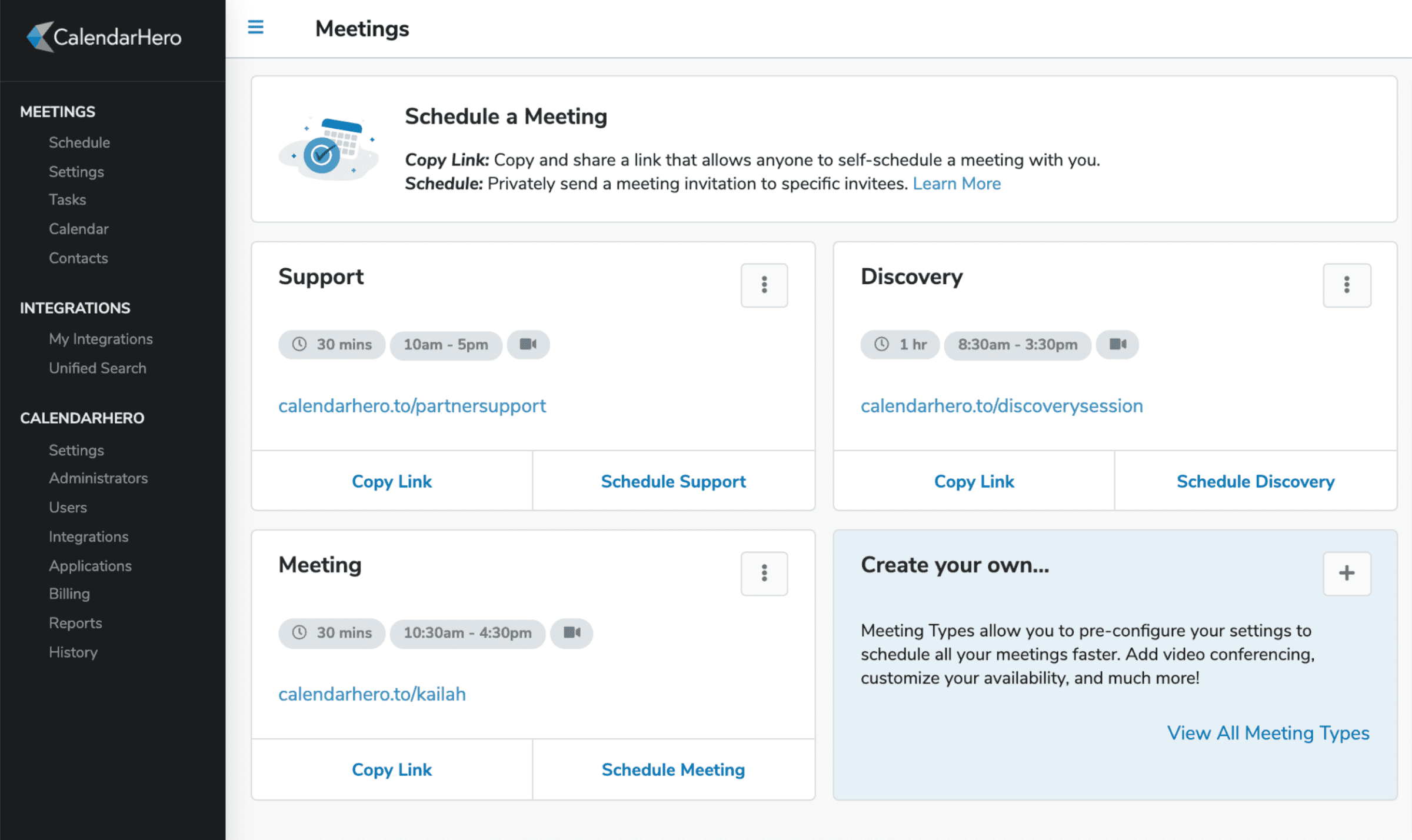
Image Source: CalendarHero
I like how it lets you set up an automated meeting that adapts to your preferences and workflow. These meetings are based on team members’ availability, expertise, and workload, ensuring efficient resource allocation and reducing scheduling conflicts.
Pros:
- AI-driven meeting scheduling to find optimal times based on preferences
- Customizable booking links and pages for a consistent brand experience
- Group scheduling features to accommodate multiple participants with ease
- Meeting preparation tools, including agenda-setting and note-taking functionalities
- Responsive support team for guidance and issue resolution
Cons:
- Advanced AI features and integrations require premium plans
- Limited customization options for the booking pages compared to some competitors
Pricing:
A free plan is available for up to 5 automated meetings per month. Paid options start from $8/month.
9. Google Workspace – Best for Layering Multiple Calendars in a Single View
Google Workspace is a cloud-based suite of productivity and collaboration tools that includes Google Calendar. It is one of the best scheduling software I use to create and share calendar events with the team.
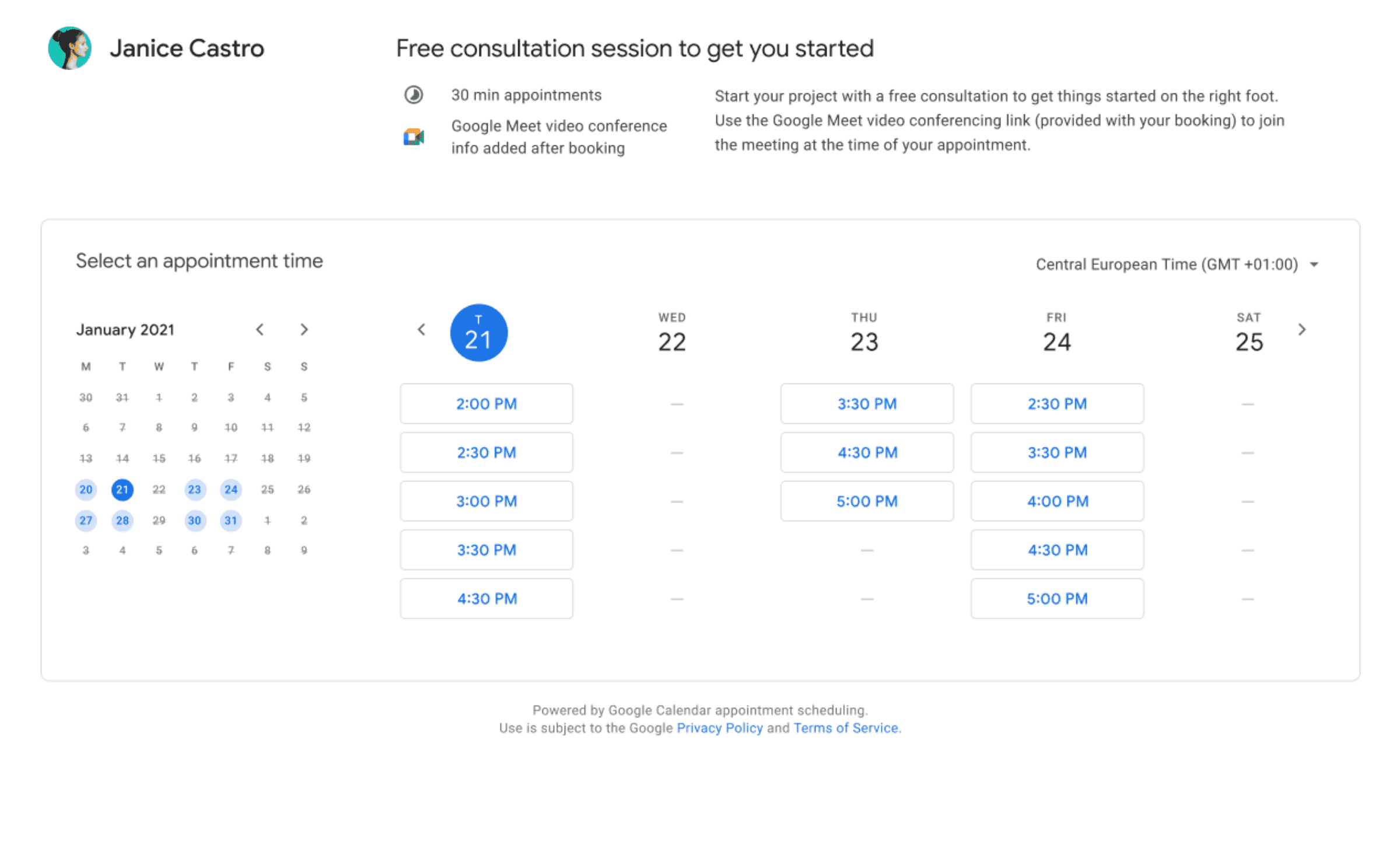
Image Source: Google Workspace
The software remains a popular choice for its inherent simplicity and ability to layer multiple calendars in a single view. What that means is it allows teams to easily visualize team member availability and identify potential scheduling conflicts, fostering efficient collaboration and time management.
Pros:
- Integrates seamlessly with other Google Workspace applications
- Real-time updates and synchronization across devices
- Smart scheduling suggestions to find the best meeting times
- Customizable privacy settings to control who can see calendar details
- Event attachment feature to keep all relevant materials in one place
Cons:
- Reliant on Google ecosystem for full functionality
- Storage costs can add up with time, especially for growing businesses
Pricing:
Starts at $6/user/month.
10. HoneyBook – Best Online Meeting Scheduler for Freelancers
HoneyBook caters specifically to freelancers and creative professionals who often need to schedule client meetings. I liked the tool’s user-friendly interface – specifically designed for managing client communication. You can also schedule consultations and send invoices – great for solopreneurs and small creative agencies.
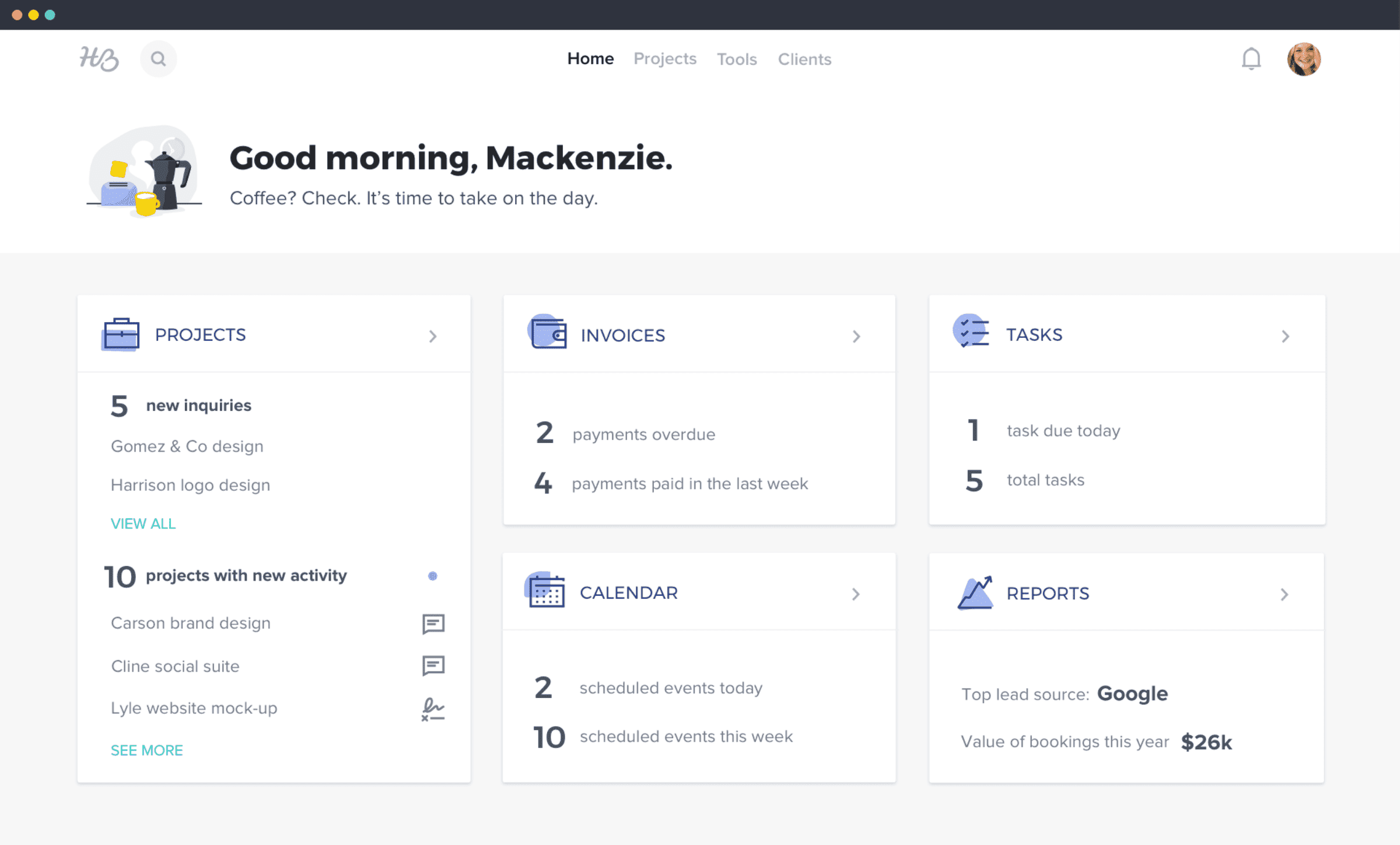
Image Source: SaaSworthy
It’s a calendar scheduling tool that, although it doesn’t come with a free plan, still adapts to a freelancer’s workflow. In my experience, integrated features like proposals, contracts, and invoicing are invaluable for those who aspire to present a professional front while streamlining administrative tasks.
Pros:
- Integrated project management and client communication tools
- Customizable booking forms and scheduling pages
- Online payment and invoicing integration for seamless financial transactions
- Client portal for centralized communication and document sharing
- User-friendly interface designed for ease of use without extensive training
Cons:
- Pricing may be steep for individual freelancers
- Lacks advanced scheduling features like team scheduling or round-robin appointments
Pricing:
Starts at $16/month.
Evaluation Criteria
The evaluation of products or tools chosen for this article follows an unbiased, systematic approach that ensures a fair, insightful, and well-rounded review. This method employs six key factors:
- User Reviews / Ratings: Direct experiences from users, including ratings and feedback from reputable sites like G2, provide a ground-level perspective. This feedback is critical in understanding overall satisfaction and potential problems.
- Essential Features & Functionality: The value of a product is ascertained by its core features and overall functionality. Through an in-depth exploration of these aspects, the practical usefulness and effectiveness of the tools are carefully evaluated.
- Ease of Use: The user-friendliness of a product or service is assessed, focusing on the design, interface, and navigation. This ensures a positive experience for users of all levels of expertise.
- Customer Support: The quality of customer support is examined, taking into account its efficiency and how well it supports users in different phases – setting up, addressing concerns, and resolving operational issues.
- Value for Money: Value for money is evaluated by comparing the quality, performance, and features. The goal is to help the reader understand whether they would be getting their money’s worth.
- Personal Experience / Expert’s Opinion: This part of the evaluation criteria draws insightful observations from the personal experience of the writer and the opinions of industry experts.
Sync Every Teammate’s Availability Into One Shared View
My Top 3 Picks for the Best Group Calendar Software?
If you are running low on time and just want an easy scheduling program without digging through every option, check my top three picks below:
1. BIGContacts
It excels as a scheduling app, offering robust automation for reminders and calendar management. Tailored for startups and SMBs, the software efficiently handles contacts, leads, sales, and appointments, with features like automated follow-up emails and group scheduling.
2. Rallly
This tool simplifies group scheduling by allowing you to create polls and vote on meeting times, minimizing email exchanges. Ideal for small businesses, it enhances team collaboration and streamlines scheduling processes for internal meetings.
3. Google Workspace
Google Workspace, featuring Google Calendar, is a leading cloud-based suite for productivity and collaboration. It simplifies scheduling by allowing easy creation and sharing of calendar events within teams.
Choose the Best Group Scheduling Software and Stop the Back-and-Forth
The right group scheduling tool depends on what features you need and what budget you have. This is crucial to keep your business productive and manage appointments without a sweat.
Whether you need a full-blown group scheduler or a lighter team availability app, the best pick is the one your team and clients will actually use without extra training, so always test it before committing to a paid plan.
For teams that want scheduling folded into daily contact and follow-up work instead of living in a separate app, a tool like BIGContacts covers that ground starting from its free plan.
Frequently Asked Questions
What is group scheduling software?
Group scheduling software, sometimes called a scheduling app for groups, helps you coordinate appointments with multiple people, eliminating email back-and-forth and finding a time that works for everyone. It automates tasks like sending invites and reminders, and managing conflicts, saving you time and boosting efficiency.
What are the features of a group scheduling system?
A group scheduling tool for startups typically includes availability sharing to show everyone's free and busy times, scheduling polls or links so participants can vote or book directly, and automated reminders to keep everyone on track. Most also integrate with calendars and video conferencing tools, and support team scheduling to assign meetings to the right person.
What are the benefits of a group scheduling tool?
Group scheduling tools save time by eliminating email ping-pong and finding a meeting time everyone agrees on quickly. They improve communication by keeping everyone aligned on meeting details, reduce double-booking and scheduling conflicts, and automate routine tasks like sending invites. The result is better efficiency and more time spent on actual work instead of scheduling logistics.
Do group scheduling platforms offer multi-time zone support for businesses operating globally?
Yes, many group scheduling platforms and even free meeting scheduling tools offer multi-timezone support for businesses operating internationally.
How many people can join a group meeting for free?
There is no universal number for how many people can join a group meeting for free. It depends on the software vendor and the plan you are using. For example, BIGContacts' free plan supports up to 100 contacts, while its starter plan allows up to 1,000.
Is data encryption used to protect information transmitted through the software?
This varies from one software to another. While most companies offer some level of data security, others, like BIGContacts, provide advanced protection by complying with GDPR (General Data Protection Regulation) and CCPA (California Consumer Privacy Act) guidelines.
How do I choose the best group scheduling software?
Start by identifying your needs, including team size, scheduling complexity, and the features and budget that matter most. Compare core features like availability sharing, scheduling options, integrations, and reporting, and read user reviews before deciding. Testing a free trial or demo of the scheduler program firsthand, with a focus on ease of use, makes the final choice much easier.
FREE. All Features. FOREVER!
Try our Forever FREE account with all premium features!